
Reporting culture | Traficom
Transport and Communications Agency

Reporting culture

Reporting culture – basis for building safe operations
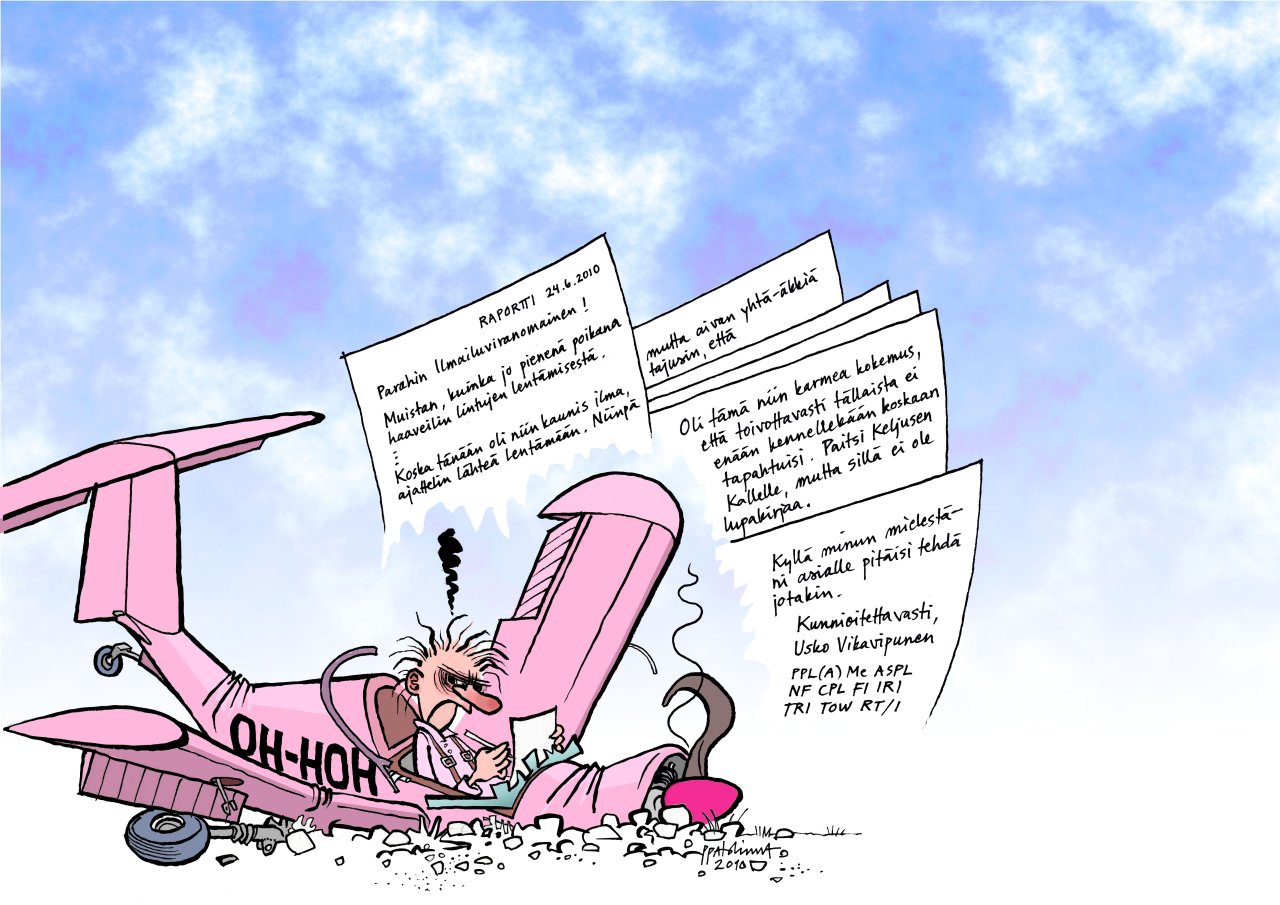
Asenne ratkaisee

This page contains information of the concept of reporting culture and its significance to everyday aviation activities in aviation organisations and communities, as well as practical information about reinforcing the elements of safety culture and maintaining a good safety culture.

Learn more: .

Depending on perspective, reporting culture is an essential part of safety culture or a separate cultural element affecting safety management. In both cases, it can be defined as follows:

Reporting culture is an entity’s or operator’s (e.g. Finnish aviation community or aviation authority, organisation or club) ability and willingness to:

  • understand the importance of the occurrence information reported to safety management
  • create a confidential atmosphere in which people want and dare to report observations that may affect safety, including the shortcomings, strengths and good practices of their own system/organisation as well as their own conduct and actions.

Reporting culture is related to occurrence reporting. The Occurrence Regulation’s (EU) 376/2014 definition of occurrence: “any safety-related event which endangers or which, if not corrected or addressed, could endanger an aircraft, its occupants or any other person and includes in particular an accident or serious incident.”

Elements of a good reporting culture

The development of a good reporting culture requires long and exacting work. At the same time, it can be easily undermined by misconduct.

Occurrence reporting covers occurrences, incidents, serious incidents and accidents. All the aforementioned can be referred to collectively as occurrences. In a healthy, advanced reporting culture, the majority of reports concern minor occurrences. These are often situations were safety was not compromised, the risk level barely rose and at least the majority of safety barriers functioned well. They can also be events where one good and correct (in that situation) action increased the level of safety and even saved the day (cf. safety II perspective). For example, a person may have observed something in their own conduct or identified a situation where safety could have been endangered or a procedure that could be improved in terms of safety. The target for development can be instructions or training, for example.

Reports related to a person’s, or e.g. flight crew’s, own actions and observations usually contain information that would not have been obtained without the person’s own interest to report the situation. Moreover, the transparency and extent of the information provided by the person depends on their desire to share the information. This is the unique characteristic, value and challenge of occurrence information in aviation.

High-quality occurrence information consists of both reactive and proactive information. It is important that the organisation or community has established clear and uniform report processing practices and that occurrences are reported following these practices. Occurrence reports should contain the following information:

  • what happened
  • why this happened
  • what saved the day, i.e. why was safety not endangered or why were the consequences not more serious; what kind of conduct should be supported in the organisation or which new practices could be introduced, perhaps even more widely, in future
  • how similar situations or incidents that could happen without improved safety measures can be prevented in the future.

Aviation operators are responsible for the safety of their operations. High-quality information is one of the key information sources in safety management and it produces valuable data for the risk management and development of the operator’s own operations. Only a limited number of occurrences concern an individual organisation. There are many situations where an organisation does not know that it is a party to an incident or the responsibility for finding a solution or implementing safety improvements lies with another operator. Confidential exchange and sharing of safety information, and especially the conclusions made based on the information, with other organisations and communities is a great way to receive more comprehensive data and seek solutions to problems together. At the national level, this work is done through the means of safety promotion and risk management.

Development of reporting culture

One element of the development of a reporting culture is the “cause” behind the reported occurrences. At the start of the development, people tend to report the misconduct or negligence of third parties. In such cases, the recipient of the report does not learn about the occurrences attributable to their own organisation or personnel/crew, i.e. the impact of their organisation’s actions on safety.

In the second stage, the reports concern one’s own organisation’s “errors” or shortcomings. In order to reach this stage, the organisation must have established some kind of Just Culture (see the “Just Culture” page for more information). The recipient of the report obtains important information about the impact of their organisation’s actions on safety. However, the recipient does not receive information about the impact of the reporter’s own actions on safety nor the observations or suggestions for improvement of the persons involved in the situation. Information “concealed” by the reporter’s disinterest to share it remains unknown.

When the reporting culture is open and confidential, people start reporting their personal mistakes. In that case, the report recipient obtains high-quality information for safety management and is able to ensure the safety of its operations in a proactive manner. Naturally, a healthy reporting culture and high-quality information are not enough – the organisation must have the ability and will to analyse and actively utilise the information obtained.

Importance of a good reporting culture to the organisation’s safety management

Section Elements of reporting culture describes the development of a good reporting culture and the importance and impact of reporting one’s own or their organisation’s non-compliant activities. Organisations should acknowledge that a good reporting culture is a prerequisite for obtaining accurate safety information from frontline employees, ensuring an adequate level of safety and developing the organisation’s performance. 

The development of a good reporting culture is long and exacting work. In addition to functional processes, work instructions and training, evidence is required of the fact that the confidential procedure is implemented in practice and followed in the processing of reports. The development also requires proof of the organisation genuinely valuing the reporting of safety information, processing the information in an appropriate manner, utilising the information in practice and communicating the outcomes to the personnel. 

How to obtain high-quality information from individuals?

Although personnel is obligated to report any occurrences they observe, high-quality and comprehensive safety data cannot be obtained without the establishment and maintenance of a Just Culture and active communication about it within the organisation. Individuals must be able to trust that the principles of Just Culture are followed in everyday operations. Reports and the data produced must be processed in an appropriate manner, with the aim of gaining safety value, and the organisation must not apply measures interpretable as a penalty or sanction to an individual, discriminate them or hinder their work performance based on the fact that the individual has acted in conformity with the Occurrence Regulation. The organisation must define its ground rules and communicate them to the personnel. The reporter must be able to trust that the genuine aim of the processing is to develop and improve safety.

In addition to following the ground rules, it is important that individuals are encouraged and motivated to produce safety data and report their own errors and misconduct. Individuals are more eager to report issues if they receive information about how their reports are used to improve safety. The utilisation of reported information must be visible in the organisation’s operations. The organisation can demonstrate the genuine and goal-oriented nature of the reporting process by informing the personnel of the process and its outcomes.

Reporting – an individual’s role and its importance

Section Elements of reporting culture describes the development of a good reporting culture and the importance and impact of reporting one’s organisation’s or community’s as well as their own non-compliant activities.

In both professional aviation organisations and aviation clubs and communities, it is important that individuals understand the significance of occurrence information to safety work and reinforce a good reporting culture by their own example and actions.

In the aviation sector, it is common to establish an informal procedure for sharing experiences and safety information with other members of the community or colleagues. Reporting culture and occurrence reporting systems are a systematic way to share one’s experiences and learn from others’ experiences and observations. This information is compiled in a documented way for analysis and the takeaways are shared widely for the benefit of the aviation sector.

The reporter should remember that detailed feedback is not necessarily given for an individual report without a good reason. This applies at both the organisational and national levels. The safety information provided by a report is often utilised e.g. in the monitoring of different occurrence types and risk levels as well as in the analysis of different occurrences or phenomena on a wider scale. An occurrence can be utilised over a period of more than one year. In addition to or instead of direct impacts, the outcomes of a report can appear in long-term safety promotion. Examples of this type of promotion at the national level include aviation safety bulletins and the aviation pages on the Data.Traficom`s aviation website https://tieto.traficom.fi/en/liikenne/ilmailusta.

Individual’s responsibility

In aviation, individual professionals and enthusiasts must know their reporting obligations and report occurrences accordingly. On this page, you can find a link to Traficom’s Air Safety Report page for more detailed reporting instructions. It is important that the organisation or community has established clear and uniform report processing practices and that occurrences are reported following these practices.

To ensure the information provided can be used to its full potential, the report must be of high quality. Section Elements of reporting culture describes what information should be included in an occurrence report. The reporter should also consider what information they themselves would need to analyse the situation and plan safety improvements. 

Utilising occurrence report information in regulatory work as part of national safety management

Traficom extensively compiles safety information from numerous sources. Air Safety Reports constitute one of the most important sources. The occurrence information obtained through them is a key safety management source at the national level. Section 2.5, Safety information: compiling, analysing, exchanging and confidentiality, of the Finnish Aviation Safety Programme (FASP) describes the functions related to the processing of occurrence information at Traficom in more detail. In addition, section 2.6, Hazard/threat identification, safety risk assessment and management, describes the safety risk management process in Finnish aviation. Occurrence information is one of the most important sources in this process. FASP section 4.2, External training and sharing of safety information, depicts the methods used by Traficom to share safety-related information with the aviation community.

Important information is obtained by analysing occurrences both as individual cases and larger entities under a specific safety theme. This information supports risk-based decision-making as part of risk management.

Traficom oversees aviation organisations based on risks and performance and assesses the performance of their safety management systems (SMS) (see FASP, section 3). Traficom also pays attention to the status of the organisations’ safety and reporting cultures as well as compliance with the principles of Just Culture as part of the SMS assessment. Learn more about Traficom’s regulatory work on the Just Culture – an important building block of safe operations page.

We have compiled below a few links to safety information obtained by analysing occurrence reports:

Links to traficom’s flight safety report page and the occurrence regulation

Reporting obligations and instructions:

Instructional material for practical application in SMS work: Just Culture decision-making charts

Page was last updated